Renovating in 2026 is less about chasing looks and more about making a property work harder — for daily life, for energy bills, and for long-term value. That shift is especially sharp on the North Shore, where much of the housing stock dates from the 1960s–1980s and the gap between an updated home and a dated one keeps widening at resale. Here are the trends we’re seeing drive real value across North Vancouver and West Vancouver this year — and which ones deserve your budget.
1. Energy efficiency is now a value driver, not a virtue signal
The biggest change in 2026 is that energy upgrades have moved from “nice to have” to one of the first things buyers and appraisers look for. Heat pumps have become the default replacement when an aging furnace or baseboard system gives out, helped along by provincial and federal rebate programs that meaningfully offset the cost. Insulation, air sealing, and window upgrades follow close behind — unglamorous work that pays for itself in comfort immediately and in resale later. EV-ready parking is joining the list: adding a Level 2 charger circuit during a renovation costs a fraction of retrofitting one later. For current numbers, see our guide to energy-efficient home upgrade costs in North Vancouver.
2. The income-suite era has arrived
British Columbia’s small-scale multi-unit housing rules have opened up what single-family lots can legally hold, and North Shore homeowners are responding: the legal basement suite is now the single most requested value-adding renovation we build. A permitted suite adds rental income, future flexibility for family, and a measurable bump in appraised value — provided it’s done to code, with proper egress, fire separation, and a separate entrance. Our basement renovation and legal suite service manages the full permit process with the District and City of North Vancouver, and our guide to basement suite regulations in North Vancouver covers what the rules require in 2026.
3. Warm minimalism has replaced cold grey
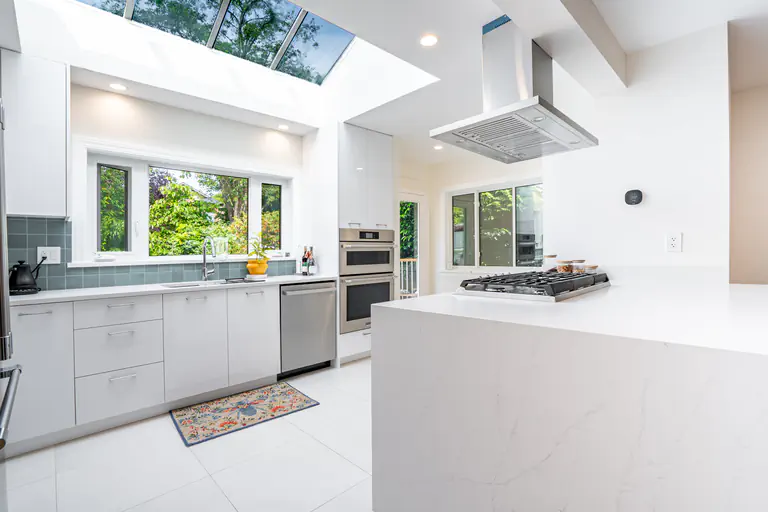
The all-grey, high-gloss look that defined the 2010s is officially dated. In 2026, the direction is warm minimalism: earthy tones, natural wood cabinetry, textured stone, matte and mixed-metal fixtures, and layered lighting that makes rooms feel calm rather than clinical. In kitchens, that means quartz and porcelain surfaces, integrated appliances, and islands designed as gathering places rather than extra counter space. In bathrooms, spa-inspired design keeps gaining ground — curbless showers, heated floors, and freestanding tubs where the footprint allows. The common thread: fewer, better materials chosen to age gracefully.
4. Smart home features are simply expected
Automated lighting, smart thermostats and heat-pump controls, video doorbells, and app-managed security have crossed from luxury to baseline. Buyers walking into a renovated home in 2026 expect to control the essentials from their phone. The practical takeaway for renovators: rough in the wiring and hubs during construction, when it’s cheap, rather than bolting devices on afterward.
5. Homes that flex across generations
More North Shore families are renovating to keep parents close or adult children housed — and to keep themselves in their homes longer. That translates into main-floor bedrooms and full baths, wider doorways, curbless showers, better lighting, and layouts that can shift roles over time. Aging-in-place features have shed their institutional image; done well, they’re invisible until they’re needed, and they widen the pool of future buyers rather than narrowing it.
6. Outdoor rooms built for a North Shore climate
The outdoor living trend has matured past the barbecue patio. In 2026 it means covered, heated, usable-in-February spaces: roofed decks, infrared heaters, outdoor kitchens under cover, and landscape lighting that extends the evening. On the North Shore, weatherproofing is the difference between an outdoor room used forty days a year and one used two hundred.
Which trends actually pay you back
Not every trend deserves equal budget. Year after year, the strongest returns on the North Shore come from the same hierarchy: kitchens and bathrooms first, a legal suite where the lot and layout allow it, then energy upgrades that cut operating costs, then everything else. Industry research consistently finds kitchen upgrades and added suites among the projects with the highest owner satisfaction and buyer demand — which matches exactly what we see on the ground. Before committing, it’s worth pressure-testing any plan against our North Vancouver renovation cost guide so the budget reflects 2026 pricing, not wishful thinking.
Planning a renovation this year?
Arani Construction has been renovating North Shore homes since 2011 — design, permits, construction, and handover under one fixed-price contract. If you’re weighing which of these trends fits your home and budget, book a free consultation or call +1 (604) 537-1753 and we’ll give you an honest read on where your renovation dollars will work hardest.